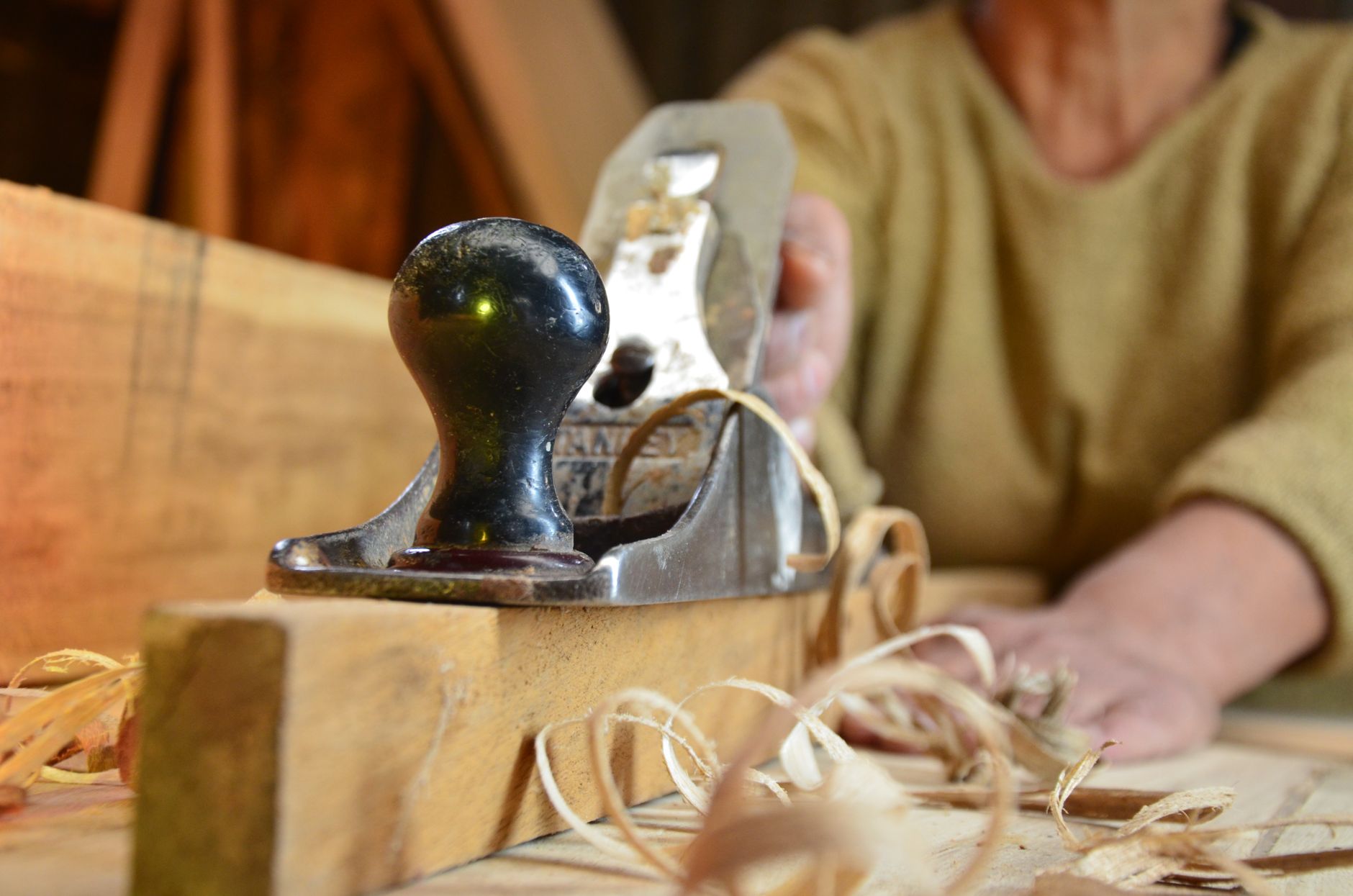
My workbench is a slab of old-growth pine, salvaged from a barn tear-down near Lecanto back in 1994. It's seven feet long, eight inches thick, and it's got more character than most people I know. The knots are like fingerprints — each one tells you where a branch used to reach for the sun.
I don't use power tools anymore, not since the arthritis set in around my right thumb. Not because I can't, but because the hand tools are honest. A joint plane tells you exactly how much wood it took off — you can see it in the shavings, curling like paper ribbons across the bench. No buzzsaw can give you that conversation.
I've heard this a thousand times, and I've said it a thousand more. But here's what most folks miss: it's not just about cutting. It's about thinking. Before you touch the saw, you should know what you're making, why you're making it, and what happens if you get it wrong. A wrong cut can be fixed with glue and a clamp sometimes, but a wrong thought can't be planed smooth.
I've ruined more pieces of wood trying to force them into a shape than I can count. Oak wants to go with the grain. Pine is forgiving but soft. Poplar is soft and unforgiving. You learn the personality of each wood species the way you learn the personality of your neighbors — by spending time with it, paying attention, and listening to what it's trying to tell you.
A dull blade is a dangerous blade. It takes more force to push, and when you're pushing harder, your hands wander. I sharpen my chisels and plane irons every session — a few strokes on a leather strop with diamond paste, then a test cut on a scrap of pine. If the shaving curls and the edges are clean, it's sharp. If it crushes the fibers, keep going.