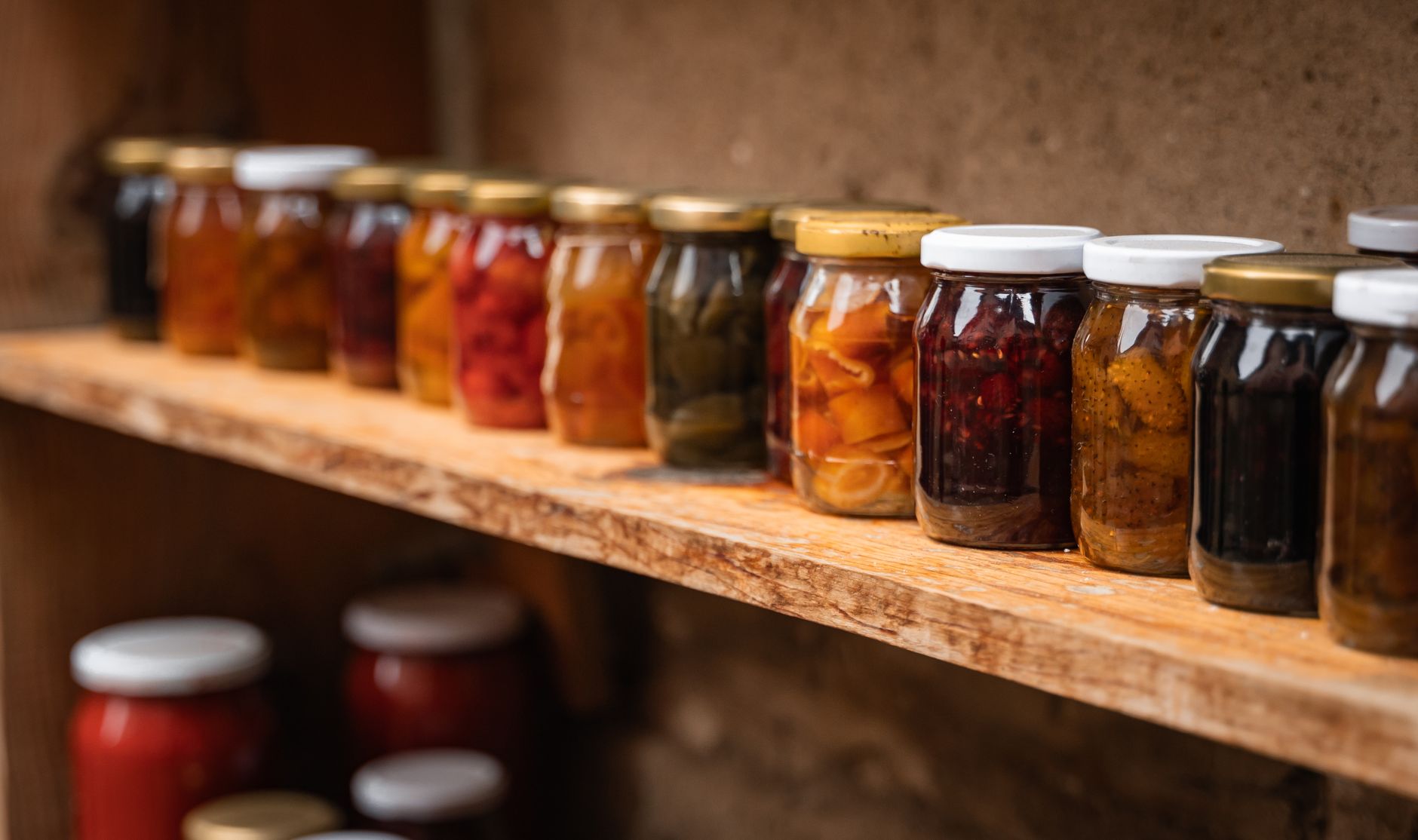
I've been canning since I was old enough to stand on a stool and reach the stove — somewhere around ten years old, I'd guess. My mama showed me how to pack tomatoes into a jar with a pocket knife, and she showed me how to watch the pressure gauge like a hawk. She said it was the only honest thing in the kitchen: the gauge tells you the truth, and if you trust it, it'll keep your family safe all winter long.
The numbers below come from the USDA National Center for Home Food Preservation — the gold standard, back in the day and now. I've organized them the way I use them: first by food type (acid or low-acid), then by altitude. If you're canning at sea level, you're using the base numbers. If you're up on a hill, you add pressure. That's the whole game.
Acid foods have a pH below 4.6. This includes most fruits, pickled vegetables, and anything with added citric acid or vinegar. These can be processed in a boiling water bath, but if you're pressure-canning them, here are the numbers:
| Altitude Range | PSI (Pound Pressure) |
|---|---|
| 0 – 1,000 ft | 5 PSI |
| 1,001 – 3,000 ft | 5 PSI |
| 3,001 – 6,000 ft | 10 PSI |
| Above 6,000 ft | 10 PSI |
Most acid fruits (peaches, berries, apples) are fine in a boiling water bath at 5 PSI equivalent. Spring Hill sits at about 40 feet above sea level, so I use 5 PSI for my peaches and 10 PSI for anything borderline.
This is where the danger lives. Low-acid foods — pH above 4.6 — can harbor Clostridium botulinum, the bacteria that causes botulism. That's a poison you can't taste, see, or smell. The only thing that kills it is sustained heat at 240°F (116°C), and you only reach that inside a pressure canner. These are the numbers I live by:
| Altitude Range | PSI |
|---|---|
| 0 – 1,000 ft | 11 PSI |
| 1,001 – 3,000 ft | 11 PSI |
| 3,001 – 6,000 ft | 11 PSI |
| Above 6,000 ft | 11 PSI |
| Altitude Range | PSI |
|---|---|
| 0 – 1,000 ft | 11 PSI |
| 1,001 – 3,000 ft | 11 PSI |
| 3,001 – 6,000 ft | 11 PSI |
| Above 6,000 ft | 11 PSI |
For low-acid foods, the PSI doesn't vary much by altitude on most modern pressure canners — 11 to 15 PSI is the range. But the processing time changes dramatically with altitude. The higher you go, the longer you hold.
Here's the thing folks get wrong: altitude doesn't just change the PSI — it changes the boiling point of water, which changes how hot your canner can get. At sea level, water boils at 212°F. At 5,000 feet, it boils at 203°F. That nine-degree drop matters when you're trying to kill botulinum spores.
| Altitude | Boiling Point of Water | Time Adjustment (water bath) |
|---|---|---|
| 0 – 1,000 ft | 212°F | No adjustment |
| 1,001 – 3,000 ft | ~209°F | Add 5 minutes to process time |
| 3,001 – 6,000 ft | ~205°F | Add 15 minutes to process time |
| Above 6,000 ft | ~200°F | Add 25 minutes to process time |
Source: USDA National Center for Home Food Preservation · USDA Agricultural Research Service
I use a 21-quart All-American pressure canner — the kind with the hand-screw lid and the weighted gauge, no dial. My daddy rebuilt the gasket on this thing back in 1989, and it still holds pressure like a drum. At 40 feet above sea level in Spring Hill, I run:
These are the times I've used for years, grounded in USDA tables. I don't guess at any of it.
My Family Recipes — the tomato canner, the field pea soup, and more.